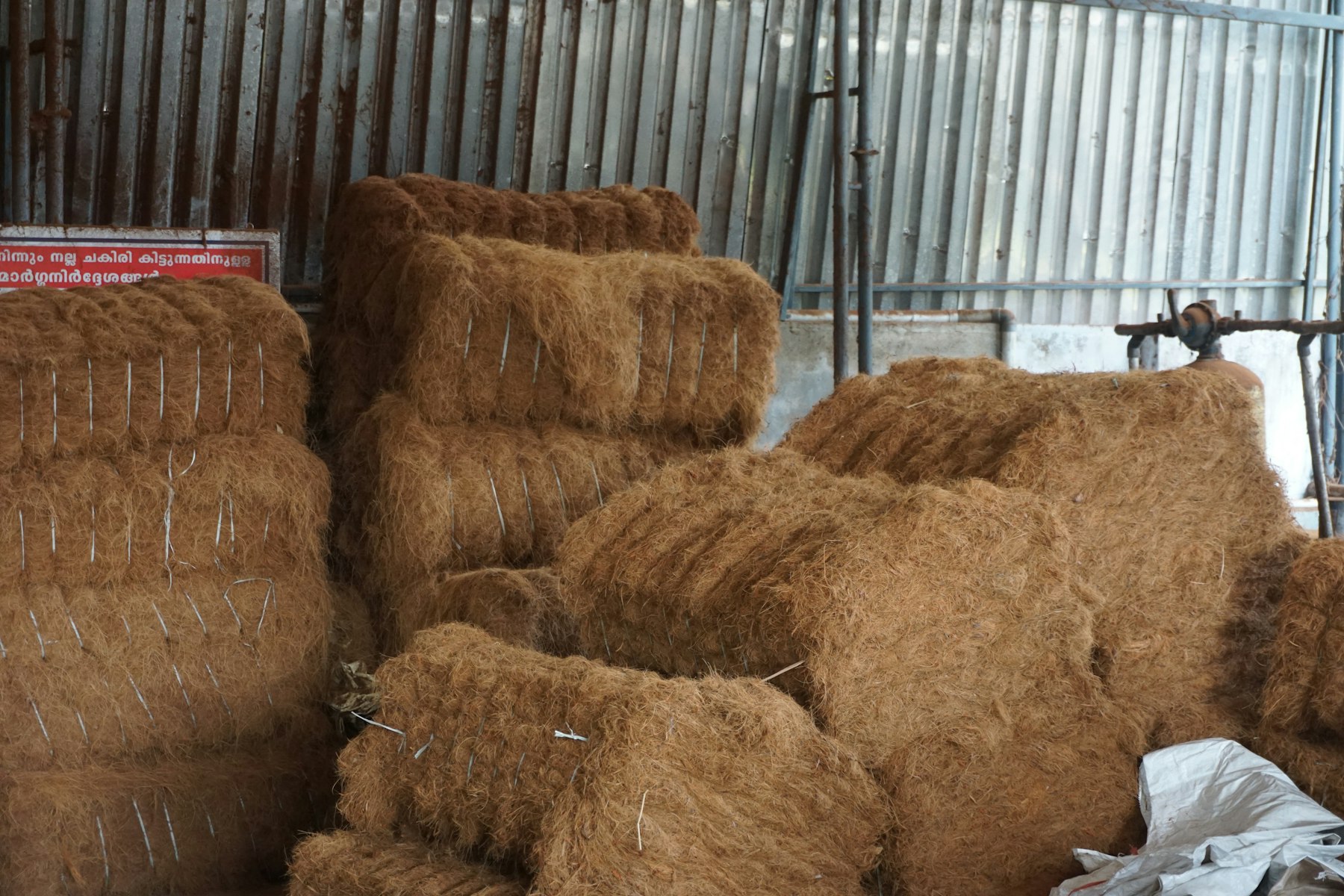
How to Export Cocopeat from India: Coir Board, Quality Specs and Buyers
Cocopeat, also called coir pith, is the spongy material left after coir fibre is extracted from coconut husk. Greenhouses, nurseries and home gardeners around the world use it as a soil-free growing medium. India and Sri Lanka are the main suppliers, with Tamil Nadu, Kerala, Karnataka and Andhra Pradesh leading production in India.
To export cocopeat from India, get an IEC, GST registration with an LUT, and register with the Coir Board, which issues the RCMC for coir products. Coir pith products fall under HS heading 5305. Agree the EC, pH, moisture and expansion specifications, choose blocks, briquettes or grow bags, get a phytosanitary certificate, and check the import rules in the buyer country before you ship.
Registrations you need
- IEC, GST and LUT: see the IEC guide and the LUT guide.
- Coir Board registration: the Coir Board, under the Ministry of MSME, registers coir exporters and issues the RCMC. See the RCMC guide.
- Phytosanitary certificate: most importing countries ask for one. See the phytosanitary guide.
HS code and product formats
Coir and coir pith products fall under HS heading 5305, with separate 8-digit codes for fibre, pith and pith products. Check the exact code with your customs broker or the Coir Board.
- 5 kg blocks: compressed blocks, the most common bulk format.
- Briquettes and discs: small sizes for retail and seed starting.
- Grow bags: ready-to-use slabs for greenhouse tomatoes, cucumbers, peppers and strawberries.
- Husk chips and mixes: chips, or blends of pith, fibre and chips for different crops.
Quality specifications
Buyers judge cocopeat by a few lab values, so put them in every quote:
- EC (electrical conductivity): shows the salt level. Washed cocopeat has low EC, and buffered cocopeat is treated to balance calcium and potassium. Horticulture buyers usually want low EC grades.
- pH: usually around 5.5 to 6.8.
- Moisture: usually under 20 percent at packing.
- Expansion: the volume a block reaches after soaking, in litres.
- Sand and fibre content: buyers want low sand and a fibre level that suits the crop.
Send a sample with a lab report before the first order; see sending export samples.
Import rules in buyer countries
Cocopeat is a plant-based product, so some countries treat it as a biosecurity risk. Australia, for example, sets import conditions that can include permits and treatment. Europe, the USA, South Korea and Japan have their own plant health rules. Ask the buyer for their import permit or conditions in writing before you produce the order, and match the phytosanitary certificate wording to those conditions.
Packing, shipping and pricing
Compressed blocks are dense, so a container can carry a large weight; plan the load with your forwarder against the container weight limit. Palletise and stretch-wrap the blocks, or floor-load them if the buyer agrees. Quote per block, per tonne or per container, FOB or CIF, with EC and moisture stated. Use the export price calculator to check figures, and take an advance or letter of credit from new buyers.
Where to find cocopeat buyers
The USA, the Netherlands, South Korea, Spain, the UK, China, Canada, Malaysia, the Philippines and the UAE buy cocopeat. On BuyGenix you can see live cocopeat requirements and country pages such as cocopeat buyers in the USA, Canada and the Philippines.
Frequently asked questions
Is Coir Board registration needed to export cocopeat?
Yes. Coir exporters register with the Coir Board, which issues the RCMC for coir and coir pith products.
What is the HS code for cocopeat?
Coir pith products fall under HS heading 5305. India uses separate 8-digit codes for fibre, pith and pith products, so confirm the exact code with your customs broker.
What EC should export cocopeat have?
Horticulture buyers usually want washed or buffered low-EC cocopeat. State the tested EC value in your quote and lab report.
Which countries import cocopeat from India?
Major buyers include the USA, the Netherlands, South Korea, Spain, the UK, China and Canada.
Planning cocopeat exports?
We handle IEC, GST, LUT and RCMC registration so you can start quoting cocopeat buyers.
See RCMC registration →Looking for buyers for your products?
See live requirements from importers and bulk buyers in India and abroad: what they want, how much, and where. Contact them directly with a BuyGenix membership.
