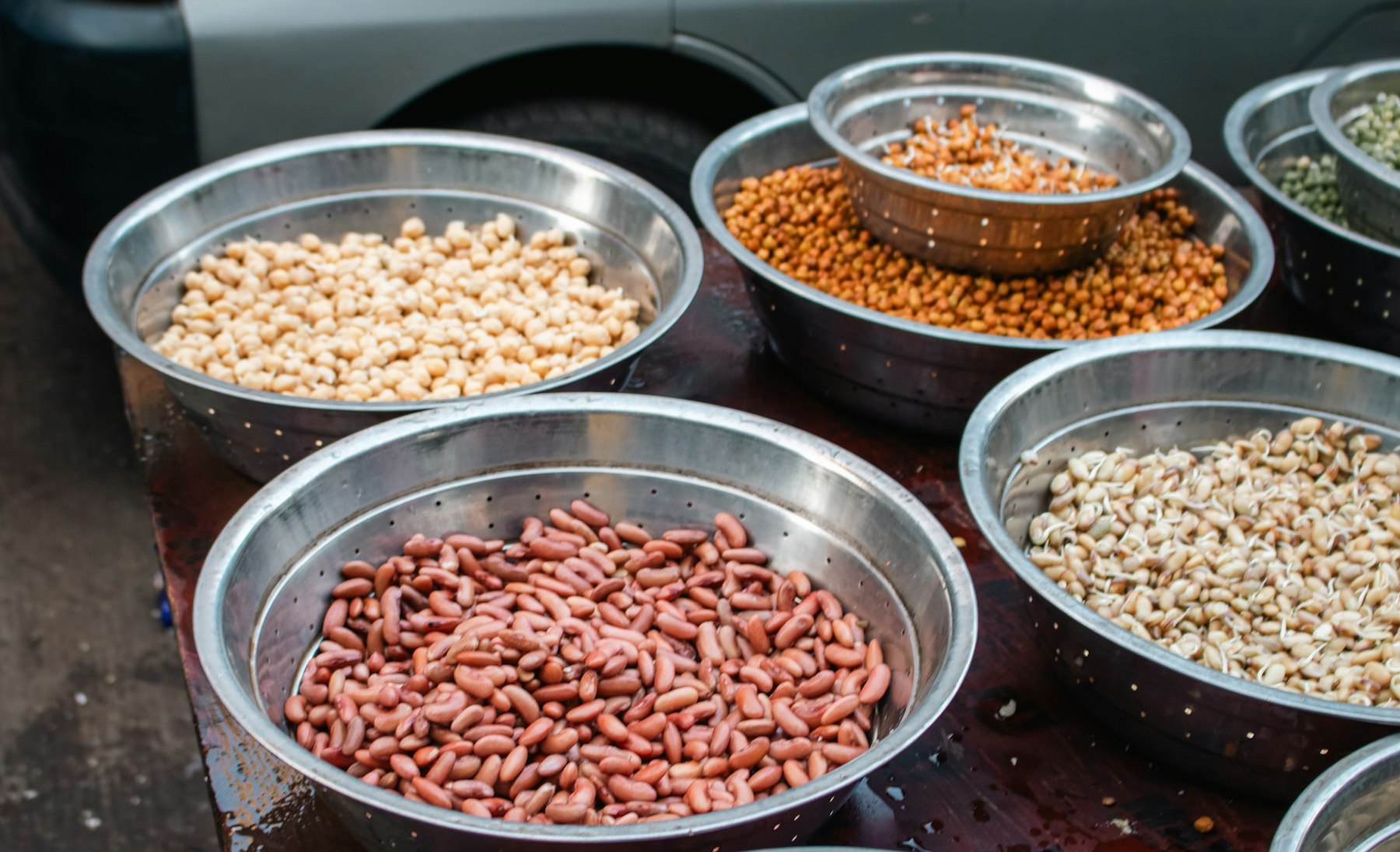
India grows more pulses than any other country and also eats most of them, so it imports pulses as well as exporting them. Exports focus on kabuli chickpeas, desi chana and packed dal for Indian and South Asian communities abroad. Policy on some pulses changes with domestic prices, so check the rules before you quote.
To export pulses from India, get an IEC, GST registration with an LUT and APEDA registration, and check the current DGFT export policy for your exact product, because some pulses have been restricted at times. Pulses fall under HS heading 0713. Agree size, moisture, foreign matter and damaged grain limits, get a phytosanitary certificate, and pack in bulk bags or branded retail packs.
Check the export policy
Because India also imports pulses, the government sometimes restricts exports of particular pulses when domestic prices rise. Check the policy for your exact 8-digit code on the DGFT website before you quote, and add a policy change clause to your contract.
Registrations you need
- IEC, GST and LUT: see the IEC guide and the LUT guide.
- APEDA RCMC: pulses are APEDA scheduled products. See the APEDA guide.
- FSSAI: needed if you process, split or pack. See FSSAI for exporters.
- Phytosanitary certificate for whole pulses. See the phytosanitary guide.
HS codes and products
Dried, shelled pulses fall under HS heading 0713: 0713 10 for peas, 0713 20 for chickpeas, 0713 31 to 0713 39 for beans such as urad, moong and rajma, 0713 40 for lentils and 0713 60 for pigeon peas (toor). Confirm the code with your customs broker.
- Kabuli chana: sold by size in millimetres or count per ounce, such as 8 to 9 mm or 42 to 44 count. Larger sizes earn higher prices.
- Desi chana and chana dal: for South Asian buyers and food processors.
- Split dal: toor, moong, urad and masoor dal, often in 1 to 5 kg retail packs for grocery chains.
Quality and packing
Specifications usually cover size, moisture, foreign matter, damaged and weevilled grains, splits and colour. Sortex cleaning is standard for export. Bulk pulses ship in 25 or 50 kg PP or jute bags; retail packs need ingredient, weight, origin and importer details in line with the destination country's labelling rules. Fumigation before loading is common.
Pricing and payment
Pulses compete with Canada, Australia, Russia and Turkey in many markets. Quote per tonne FOB or CIF with size and specification stated. Use the export price calculator to check figures, and ask new buyers for an advance or letter of credit.
Where to find pulses buyers
The UAE, Algeria, Turkey, Sri Lanka, Bangladesh, Malaysia, the UK, the USA and Canada buy Indian pulses. On BuyGenix you can see live pulses requirements and country pages such as buyers in Malaysia, Qatar and Australia.
Frequently asked questions
Can I export pulses from India freely?
Most pulses can be exported, but the government has restricted some at times. Check the current DGFT policy for your exact code first.
What is the HS code for chickpeas?
Dried, shelled chickpeas fall under HS code 0713 20.
Which pulse is exported most from India?
Kabuli chickpeas are the largest bulk pulse export, followed by desi chana and packed dal for overseas Indian communities.
Do I need APEDA registration to export pulses?
Yes. Pulses are APEDA scheduled products, so exporters register with APEDA and hold an RCMC.
Ready to export pulses?
We handle IEC, GST, LUT, FSSAI and APEDA registration so you can start quoting buyers.
See APEDA registration →Looking for buyers for your products?
See live requirements from importers and bulk buyers in India and abroad: what they want, how much, and where. Contact them directly with a BuyGenix membership.
